
Target Markets: Japan, Australia, and Southeast Asia (Thailand, Vietnam, Singapore, Malaysia).
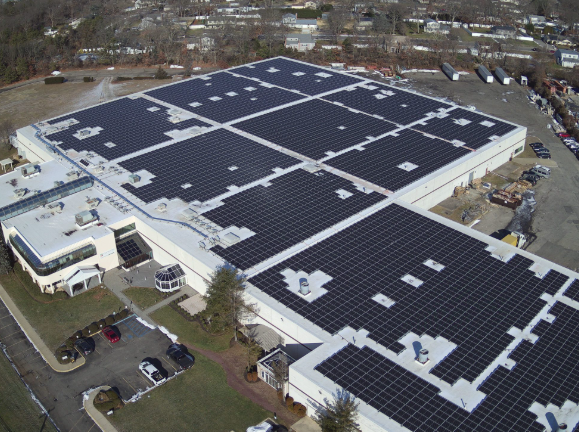
Project Criteria: Seeks rooftops of 5,000+ square meters, with ideal targets being large industrial parks or business complexes with multiple buildings.
Business Model:
- End-to-end service: development, investment, construction, and long-term operations & maintenance (O&M)
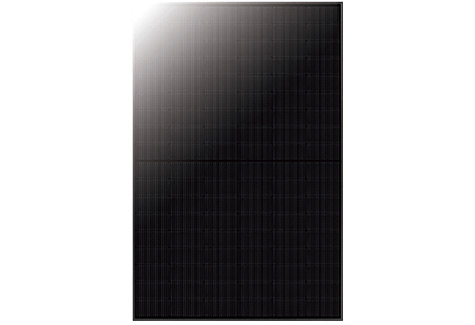
- Uses proprietary or partnered high-quality equipment (modules, inverters, mounting systems)
- Open to project transfers, supply chain partnerships, and various cooperation models
Introduction
In an era defined by the urgent need for decarbonization, rising energy costs, and the global transition to distributed renewable generation, strategic investment in large-scale commercial and industrial photovoltaic (PV) systems represents both a sound financial opportunity and a meaningful contribution to sustainability. SUNUZ CORPORATION, backed by strong capital resources and a clear regional focus, is actively developing and investing in commercial and industrial PV projects across multiple markets—principally Japan, Australia, and Southeast Asia, with Thailand, Vietnam, Singapore, and Malaysia identified as key priorities. This essay outlines SUNUZ CORPORATION’s strategic rationale, operational model, procurement and quality approach, partner and supply‑chain engagement, and long‑term asset management philosophy, illustrating how the company seeks to create durable value for building owners, host communities, capital partners, and its own balance sheet.
Strategic Rationale and Market Focus
The commercial and industrial (C&I) rooftop sector offers characteristics that align exceptionally well with SUNUZ CORPORATION's capabilities and objectives. Large roof areas on manufacturing plants, distribution centers, supermarket chains, and industrial parks present immediate opportunities to deploy high-capacity PV assets with attractive site economics: lower interconnection complexity relative to ground-mounted farms, reduced permitting timelines, proximity to onsite or nearby load (which supports behind‑the‑meter utilization and demand offset), and the potential for long-term offtake arrangements or merchant sales into local wholesale markets.
SUNUZ CORPORATION's geographic focus is informed by several complementary factors. Japan and Australia each possess mature energy markets, well-established regulatory frameworks for utility- and non‑utility scale PV, and a corporate climate-awareness that supports rooftop adoption. Southeast Asia, and in particular Thailand, Vietnam, Singapore, and Malaysia, represents a high-growth frontier for C&I PV: accelerating electrification and industrial expansion, favorable solar resource zones, rising retail electricity prices, and a growing corporate emphasis on environmental, social, and governance (ESG) performance. Within these markets, SUNUZ targets rooftops of 5,000 square meters or more, with a clear preference for larger contiguous areas and industrial/business parks where multiple buildings can be developed in a coordinated program—conditions that enable economies of scale in design, procurement, construction, operation, and financing.
Business and Project Development Model
SUNUZ CORPORATION deploys a flexible yet disciplined project development model that accommodates both turnkey development and transfer-of-rights (asset sale/assignment) structures. The model is built around the following sequential elements:
Identification and initial screening: SUNUZ's regional teams conduct targeted outreach to identify candidate rooves-factories, warehouses, supermarkets, logistics centers, and business parks—with the minimum size threshold in mind. Priority is given to sites that offer contiguous area, favorable structural conditions, and strong load profiles or grid-connection prospects.
- On-site survey and information collection: Professional teams are stationed in target countries to perform careful on-site surveys. Building owners are asked to complete a standardized questionnaire designed to capture essential data: roof geometry and structural capacity, age and condition of roofing membranes, electrical single-line diagrams and load profiles, historical consumption, grid interconnection points, shadowing analysis, and any existing leases or encumbrances.
- Internal technical and commercial assessment: Using survey data, SUNUZ performs structural assessments, generation yield modeling, preliminary electrical designs, and commercial appraisals including tariff arbitrage, potential power purchase agreements (PPAs), and local subsidy or tax incentive assessments. Financial modeling incorporates capital and operating cost projections, projected generation and revenues, and sensitivity analysis for policy, currency, and offtake risk.
- Proposal and negotiation: A tailored proposal is drafted for the building owner, setting out scope options—ranging from full CAPEX-funded installations under a lease or PPA structure to transfer-of-rights where SUNUZ develops and then assigns the project rights to a local or international investor. Commercial terms are structured to align incentives: reductions in on-site electricity cost, deferred capital outlays for owners, and clear allocations of operational responsibilities and revenue streams.
- Execution: Upon agreement, SUNUZ arranges investment capital and manages construction through in-house teams and trusted contractors. Project execution follows internationally-recognized engineering, procurement and construction (EPC) standards, with an emphasis on safety, schedule reliability, and compliance with local grid-connection and permitting requirements.
- Operations and maintenance (O&M) and asset management: Post‑commissioning, SUNUZ assigns a professional O&M team to ensure sustained performance. The company's objective is to secure operational generation revenue for 30 years or longer, underpinned by routine preventive maintenance, condition-based interventions, and performance monitoring.
Procurement, Quality Assurance, and Short Lead Times
A core commercial differentiator for SUNUZ is vertical integration and rigorous supply-chain management. The materials and components used in SUNUZ’s projects—PV modules, inverters, racking and mounting systems, DC/AC cabling, distribution cabinets, and related balance-of-system components—are either manufactured by SUNUZ or supplied by brands for which SUNUZ is an authorized representative. This approach yields several advantages:
- Quality control: By qualifying and, in many cases, manufacturing critical components, SUNUZ can ensure rigorous adherence to performance, durability, and warranty standards.
- Shorter lead times and greater scheduling reliability: Supply security reduces construction risk and accelerates time-to-market, particularly important in markets where customs, freight congestion, or policy windows can delay projects.
- Cost competitiveness: Vertical integration and scale purchasing lower procurement costs, enabling more aggressive project economics and more attractive proposals for building owners.
- Traceability and compliance: SUNUZ can rapidly provide material certifications, test reports, and compliance documentation required by utilities, financiers, and insurers.
SUNUZ also welcomes collaboration with component manufacturers that wish to join its supply chain. This openness enables the company to expand its sourcing options and fosters mutual commercial benefit with technology and component suppliers, particularly those seeking access to SUNUZ's footprint across Japan, Australia, and Southeast Asia.
Partnership Flexibility and Risk Allocation
SUNUZ recognizes that each project and each building owner has different priorities. Some building owners prefer to retain ownership and simply purchase clean energy via PPAs or leases, while others prefer an immediate cash payment through sale/transfer-of-rights. To accommodate these preferences, SUNUZ offers a range of cooperation models:
- EPC + Ownership: SUNUZ develops, finances, builds, and retains ownership of the PV plant, selling energy to the host via PPA or net‑metering mechanisms.
- Build-to-Suit with Transfer-of-Rights: SUNUZ develops the project and transfers project rights or the commissioned asset to a buyer under negotiated commercial terms.
- Joint ventures or co-investment: In select cases, SUNUZ will enter into joint ventures with local partners, industrial park operators, or financial investors to share development risk and capital.
- Contractor and supplier partnerships: SUNUZ engages local contractors and suppliers for civil, electrical, and EHS services where appropriate, creating local employment and ensuring compliance with country-specific practices.
This flexible approach helps align project risk allocation with each counterparty’s capacities and risk tolerance while maximizing deployment speed and financial feasibility.
Technical Excellence and Long-Term Performance
SUNUZ's objective is not merely to install PV systems but to deliver robust, bankable assets with predictable long‑term yield. This commitment to technical excellence manifests in multiple practices:
- Site‑specific engineering: Structural reinforcement, drainage modification, and roof warranty coordination are addressed in the design phase to ensure the rooftop's integrity over the system's life.
- High-quality components and system design: Module selection, inverter topology, mount design, and electrical configurations are chosen to optimize energy yield, minimize degradation, and ensure serviceability.
- Monitoring and analytics: Real-time supervisory control and data acquisition (SCADA), remote monitoring, and performance analytics enable quick detection of underperformance, prompt corrective maintenance, and data-driven O&M optimization.
- Preventive and predictive O&M: Regular inspections, cleaning regimes, thermal imaging, and inverter firmware management reduce unplanned downtime and extend component life.
- Warranty management and spare parts strategy: SUNUZ maintains spares and warranty support channels to mitigate long lead-time replacement risk, thereby protecting revenue streams.
Regulatory, Financing, and Market Considerations
SUNUZ's regional teams are tasked with keeping abreast of evolving regulatory landscapes, grid interconnection procedures, and incentive regimes in Japan, Australia, Thailand, Vietnam, Singapore, and Malaysia. To underpin bankable projects, SUNUZ prioritizes clear legal documentation, transparent revenue models, and prudent financial structuring, including:
- Currency and offtake risk mitigation: Hedging strategies and offtake agreements denominated in appropriate currencies can be used to manage foreign-exchange risk.
- Tax and capital allowances: Local tax incentives, accelerated depreciation, and investment grants are evaluated and incorporated when available to improve returns.
- Financing variety: SUNUZ can deploy corporate capital, project finance facilities, or collaborate with institutional investors to optimize leverage and return profiles.
- Community and environmental compliance: Environmental and social impact considerations are integrated into site selection and stakeholder engagement, particularly in industrial parks that may have residential adjacency or sensitive environmental constraints.
Value Proposition for Building Owners and Stakeholders
For building owners, SUNUZ’s offering translates into several tangible benefits:
- Reduced energy costs and improved certainty over the medium to long term.
- Immediate or phased monetization of unused roof space through lease payments, asset sales, or revenue-sharing arrangements.
- Enhancement of corporate sustainability credentials and support for ESG reporting.
- Minimal operational disruption: SUNUZ manages the full lifecycle-from survey to commissioning and long-term O&M-allowing owners to remain focused on core business operations.
For capital partners and investors, SUNUZ offers access to a diversified pipeline of C&I rooftop projects across multiple jurisdictions, underpinned by thorough technical due diligence, integrated procurement, and experienced regional teams tasked with execution and long-term asset stewardship.
SUNUZ CORPORATION is positioned to be a high-impact developer and investor in commercial and industrial photovoltaic projects across Japan, Australia, and Southeast Asia. Its focus on large roof areas—ideally 5,000 square meters or more—and industrial/business parks enables the company to capture scale efficiencies, optimize financing, and deliver superior returns while advancing decarbonization objectives. Through a flexible business model that accommodates turnkey development, transfer-of-rights, and partnership structures, SUNUZ can meet varied building-owner preferences. Vertical integration in procurement and a disciplined O&M strategy ensure quality, short lead times, and predictable performance over decades. By inviting manufacturers and local partners to join its supply chain and by maintaining professional regional teams to perform on-site surveys and tailored proposals, SUNUZ offers a compelling, collaborative path to accelerate rooftop solar adoption and deliver durable value to all stakeholders.